

Judging the Unseen
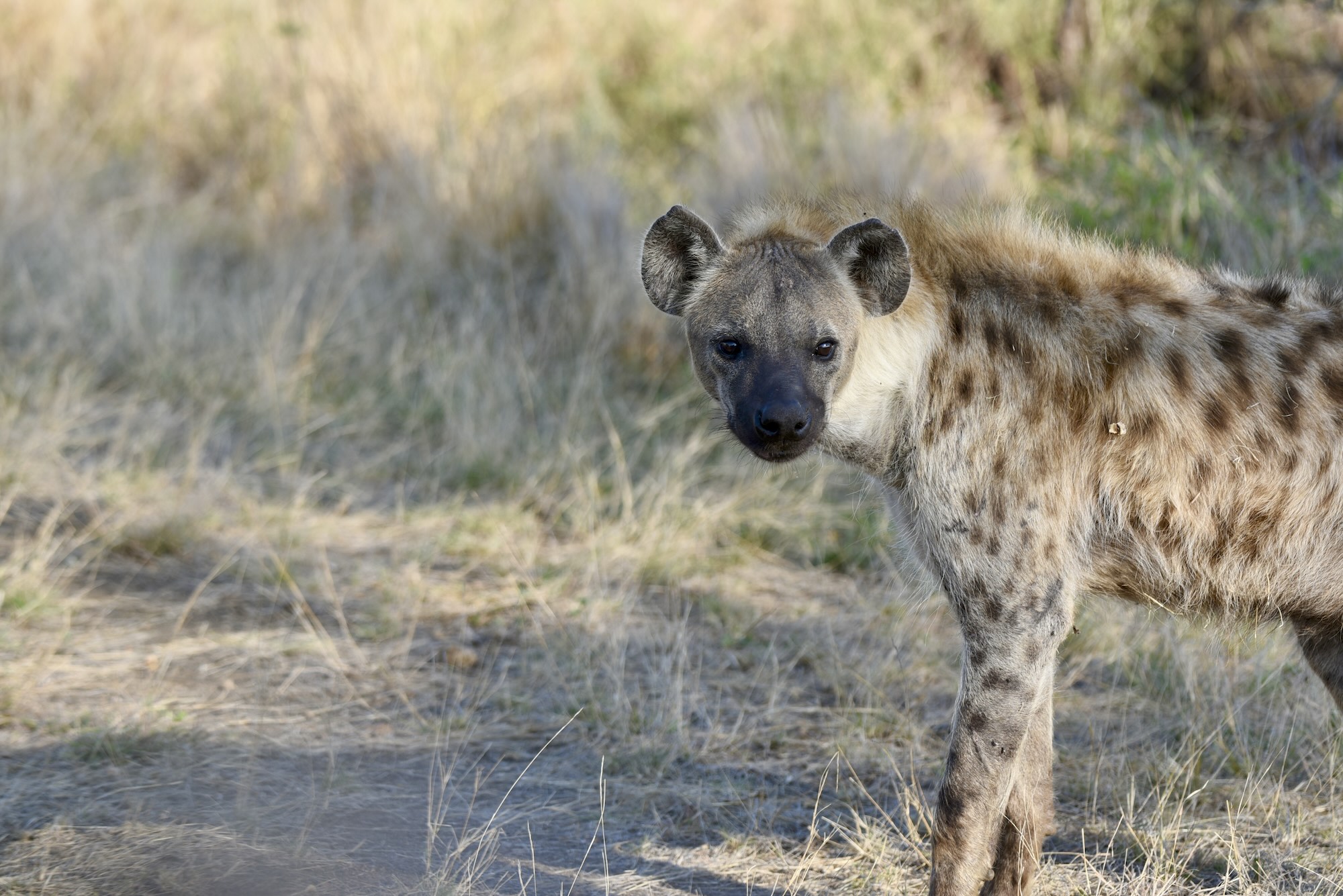
The first time I saw a hyena in the wild was on my very first safari drive in Kruger National Park, South Africa. We had just driven on from a beautiful herd of elephants when I noticed some movement ahead of us, threading through the scrub.
At first, my view was partial. A shape slipping between bushes, a low, steady movement that kept pace with us as we bumped along the road. When it moved into the open, I recognized it immediately and my mind filled in what I believed to be true.
Hyena—Cunning. Dangerous. Unscrupulous.
As those thoughts passed through me, my body tensed. A subtle uneasiness surfaced, even though I was perfectly safe. I’d never had reason to question those thoughts before; they were simply there, shaped by childhood Disney films and countless nature documentaries.
Now in full view, its form was unmistakable. Its back sloped downward, hind legs shorter than the front, giving its gait a rolling, uneven quality. Broad shoulders rising and falling as it walked. Rough, mottled fur. Eyes scanning, alert and focused. There was no urgency or display in its presence—just an animal moving through its own world, attentive and self-contained.
Further along the road, the scene widened, opening up to a pack of painted wolves standing over a fresh kill, their coats marked with blood, bodies taut and watchful. The hyena paused. They watched one another across the dusty road, calculating possibilities.
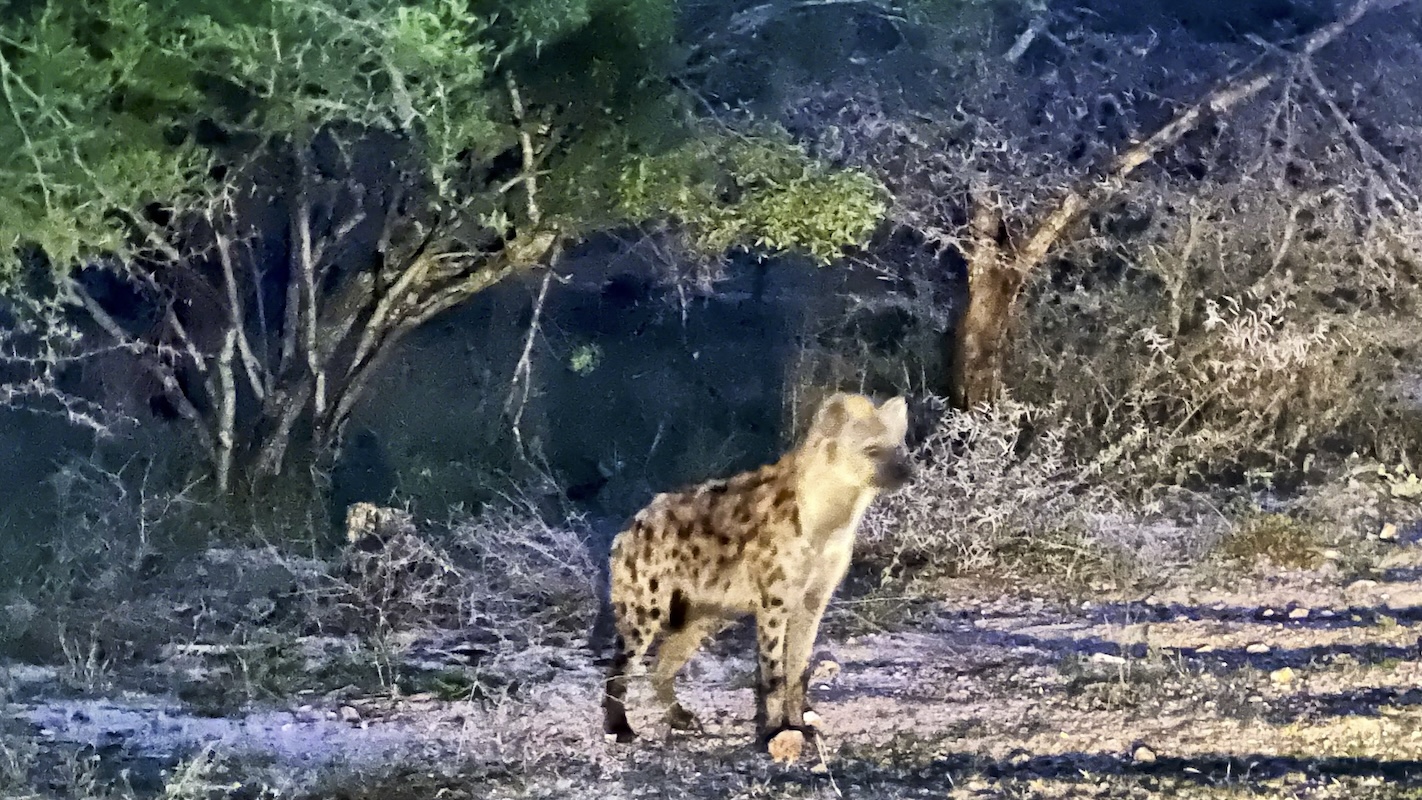
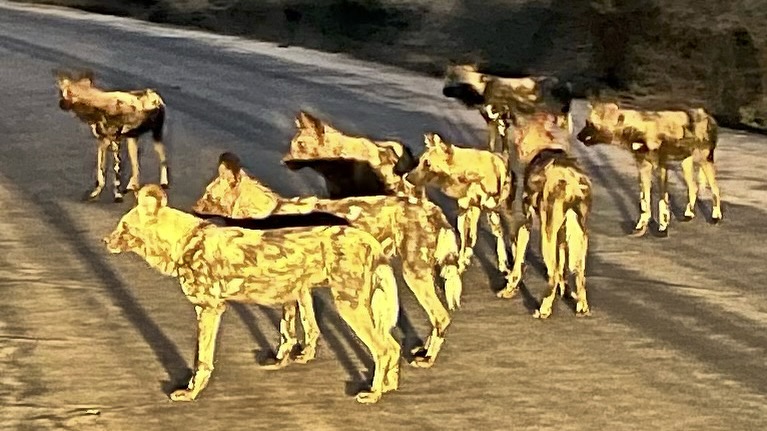
We stayed for a while to see what might unfold. Outnumbered, the hyena eventually moved on, and we turned back toward camp as the last light faded and evening settled in.
That night, I slept in an unfenced camp. At the end of the evening, our guides escorted us to our tents and explained that once inside, we were to stay put until morning. Wildlife moved freely through the camp, and among them—a hyena.
Lying in bed, the walls of my tent felt suddenly insufficient—thick canvas, nothing more. After dark, the world outside felt closer somehow. More immediate. The bush came alive with sound: insects humming, branches shifting, baboons in the trees above my tent erupting suddenly into loud, chaotic bursts. And somewhere nearby, I heard a hyena call—its long, wavering whoop carrying across the night. My mind, left to its own devices, quickly decided something terrible was unfolding out there in the dark.
As a child, I used to surround myself with stuffed animals at night, creating a small fortress against whatever might be lurking beyond the edges of my room. Lying in that tent, I felt that old wish for protection return, and—irrational as it may have been—I found myself wishing Mr. Bear were there in that moment to protect me.
The next morning, we set out on another safari drive. This time we headed north, climbing to a lookout high on a ridge where a vast plain stretched out before us. From that height, what looked like scattered dots across the landscape transformed—through binoculars—into elephants and giraffes moving about slowly in the distance.
Our guide shared a fascinating fact about Kruger Park: even if you were to drive every single road in the park, you would only ever see about 10% of it. The rest remains unseen. She explained that Kruger Park is roughly the size of Ireland.
Heading back toward camp, we came across a lone female hyena resting near the roadside. She had likely hunted through the night—hyenas are built for endurance—and now she lay with her head resting between her massive paws, eyes closed, breathing slow and even.
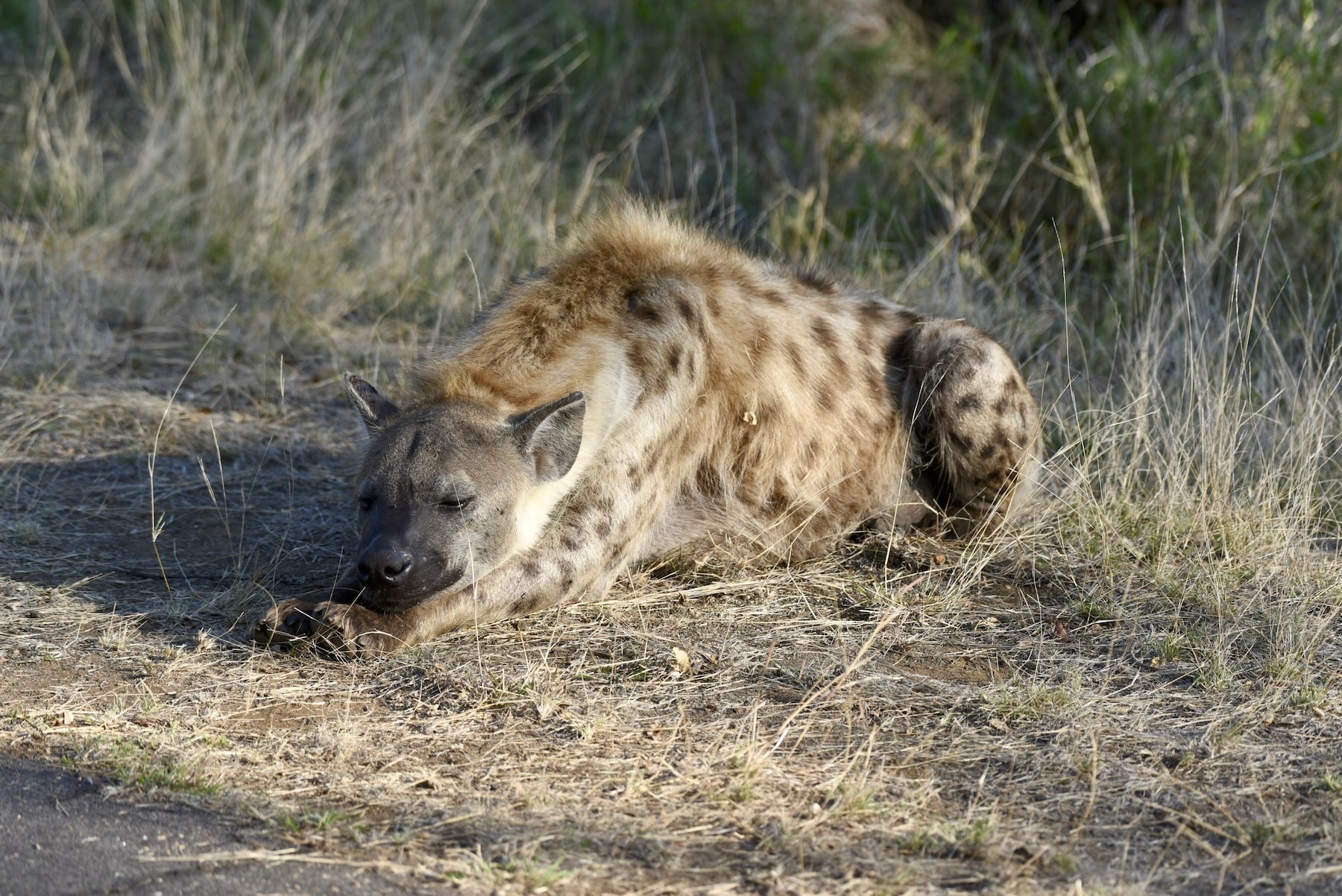
She looked peaceful, at ease, more like a family dog taking a nap than anything I had imagined.
As we watched her sleep, a cub appeared from the tall grasses nearby. Our guide explained that her den was likely hidden in the ditch below. The cub paused, cautiously checking its surroundings, and then moved toward its mother. She lifted her head briefly—just enough to acknowledge the cub—then settled again.
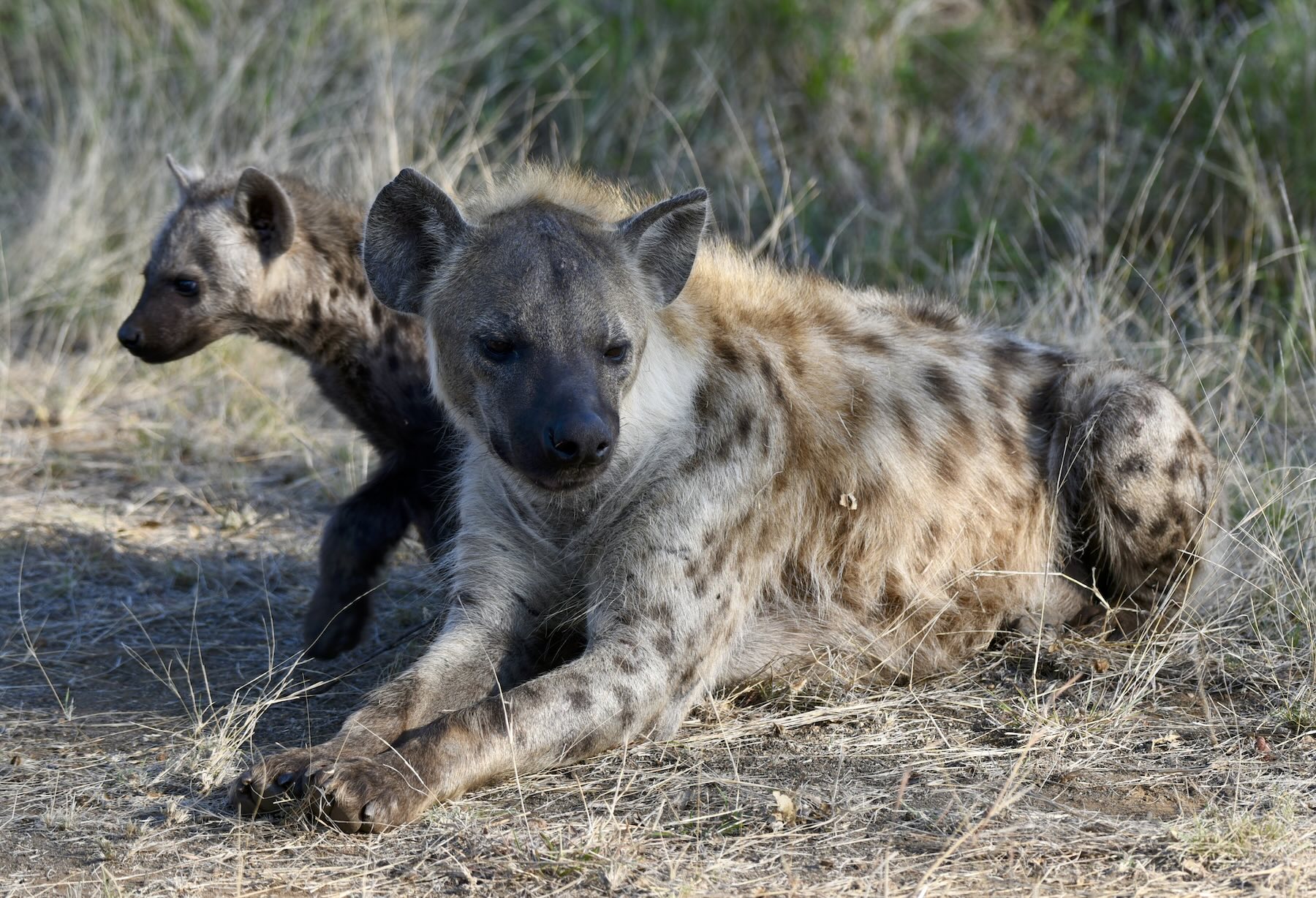
The cub sat, looked up at us in the vehicle with quiet curiosity, and eventually lay close by its mother, its small body echoing her shape. Two sentient beings resting, quiet and still.
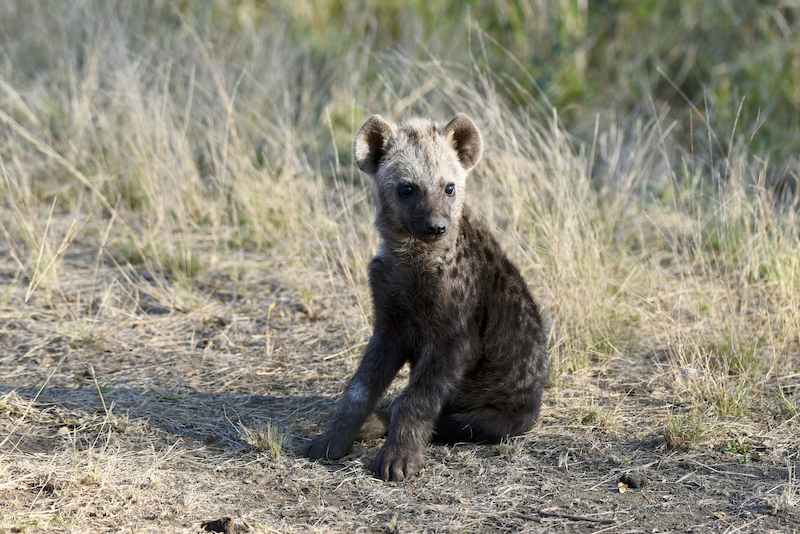
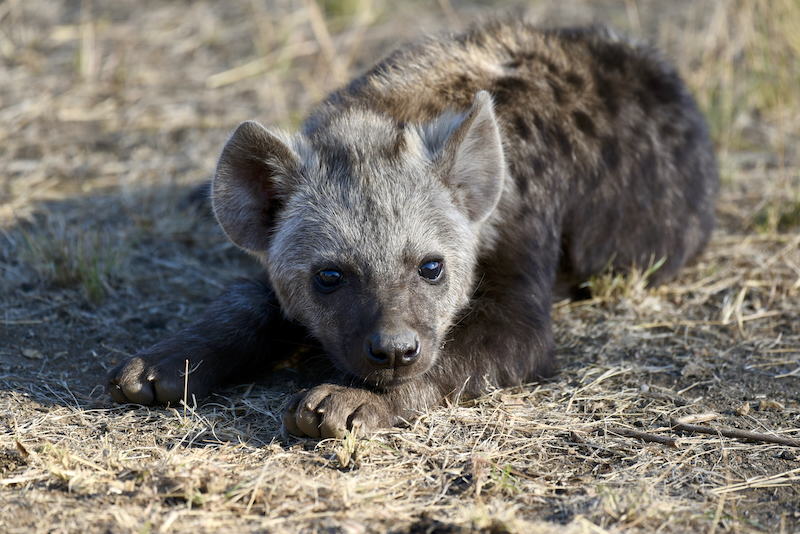
Nothing extraordinary. A small, ordinary moment of a mother and her young conserving energy in a demanding landscape.
In that moment, everything I thought I knew about hyenas fell away.
This was not a villain.
This was not a monster, a menace, or a creature of moral failing.
This was a sentient being doing what all beings here were doing—hunting, resting, protecting, surviving.
Lions do it. Leopards do it. Cheetahs do it. We admire them for it. Yet somehow, the hyena is cast differently. Condemned rather than appreciated. We tend to see animals as characters in a human story, and unfortunately, the hyena was handed the villain script. But that reputation is built on myth. Hyenas are not mindless scavengers; they are highly skilled hunters. They are not maniacal or cruel; they live in complex social structures, led by strong females who raise their young with care and vigilance. As both predators and carrion eaters, they play a crucial role in keeping ecosystems healthy—limiting overpopulation and preventing the spread of disease.
Watching this hyena with her cub, it became clear to me just how misinformed their condemnation is.
Seeing her clearly now dissolved that misconception. That narrative could no longer survive the reality of the moment.
The hyena hadn’t changed.
The story I’d been carrying about her had.
This made me wonder how often we fall into this trap—how frequently we relate to people, circumstances, or even aspects of ourselves through misconception rather than reality.
The hyena was never the monster; I simply hadn’t seen enough of her—nor made the effort—to know better. Much like the guide’s lesson about Kruger Park, we too usually only see about 10% of the picture when we judge someone—the rest remains hidden in the tall grass, requiring us to stay curious enough to look closer. If we can remember that 90% of the story is still unseen, perhaps we can offer the world—and ourselves—a little less condemnation and a lot more grace.
Is there a situation in your life where you might be judging the 10% without seeing the full picture?
Sign Up for Insights Inspired by Nature & Other Curious Places
Receive light-hearted coaching reflections and practical wisdom—never more than once a month.